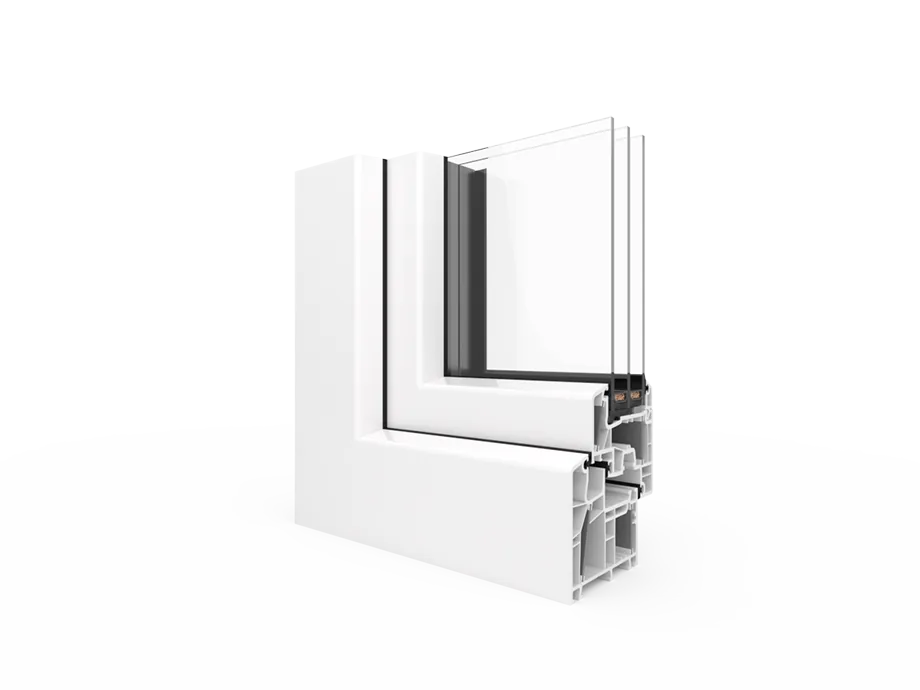
Window system product cards are full of numbers: "6 chambers", "3 seals", "installation depth 82 mm". For someone who doesn't work with window profiles every day, these figures don't mean much on their own. Here's what they actually mean and what they really affect.
Number of chambers in the profile
A window profile (PVC, or aluminium with a thermal break) is built from air chambers separated by internal walls. More chambers generally means better thermal insulation - the air trapped inside acts as an extra layer of insulation. 5-chamber systems are now the market standard; 6-7 chambers are warmer solutions, more often used in energy-efficient homes.
Number of seals
Seals (usually 2 or 3) are responsible for the airtightness of the connection between the frame and the sash. Three seals - including a central seal - improve both thermal and acoustic insulation, and also better protect against moisture and wind penetration.
Profile installation depth
This is the total thickness of the profile measured in millimetres - from 60 mm in older, budget systems, to over 120 mm in passive-house solutions. A greater installation depth allows for a thicker, better-insulating glazing unit, which directly translates into the whole window's heat transfer coefficient.
Glazing unit width
This determines how thick a glazing unit (i.e. how many panes and spacer widths) can be fitted into a given profile. Standard double-glazed units are around 24-28 mm; triple-glazed units - 40-52 mm and more. A thicker unit usually means better thermal and acoustic insulation.
How to translate this into a choice
For a single-family home with typical heating, a sensible compromise is usually a 5-6 chamber system, with 2-3 seals and an installation depth of 70-85 mm with a triple-glazed unit. For energy-efficient or passive buildings, look at systems with an installation depth of 85 mm or more.
How to read a window system's spec sheet
Manufacturers usually list parameters as: chamber count (e.g. 6/7 - meaning 6 chambers in the frame and 7 in the sash), installation depth in mm, number of seals, and maximum glazing thickness. When comparing two systems, look at all these numbers together, not a single one - a system with more chambers but a shallower installation depth can have a worse real-world Uw coefficient than one with fewer chambers but a deeper profile and thicker glazing unit. In our PVC systems offer you can select a few models in the comparison tool and see these parameters side by side.
You'll find the full specification of every system we install in our PVC windows offer - you can select several models there and compare them side by side.
Have a question about choosing windows? Call us, free advice.
📞 697 140 784