Window product cards often show a "Uw" value, e.g. 0.9 W/(m²·K). It's one of the most important parameters when comparing windows - and one of the most frequently misunderstood.
Uw, Ug, Uf - three different letters, three different things
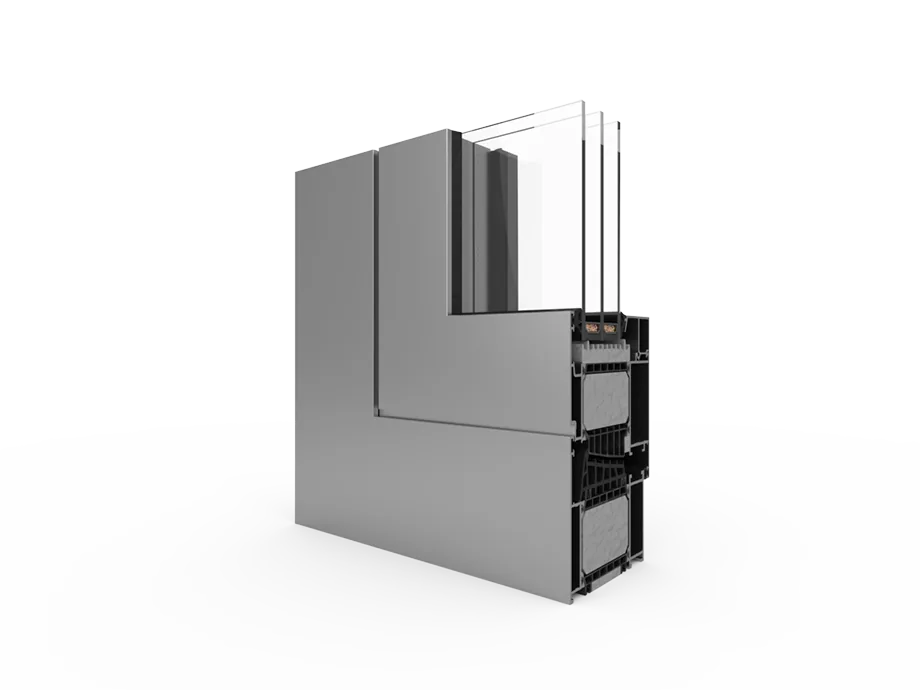
The Ug coefficient (glass) describes the insulation of the glass pane alone. Uf (frame) - the insulation of the frame/profile alone. Uw (window) is the combined value for the whole window - frame, glass and how they're joined together - and this is the figure that actually tells you how much heat will escape through the installed window. For the end customer, Uw is the important one, because it describes the product as a whole, not a single component.
Lower is better
The Uw coefficient is expressed in W/(m²·K) and works the opposite way to most "more is better" indicators - here, the goal is for it to be as low as possible. A lower value means less heat escaping through the window per unit of time, i.e. lower heating bills and a warmer interior in winter.
Typical ranges
Older, basic PVC windows can have a Uw around 1.3-1.7 W/(m²·K). Modern multi-chamber systems with triple glazing can go down to 0.9-1.0 W/(m²·K), and solutions designed for passive-house construction - below 0.8 W/(m²·K). Thermal-modernisation subsidy programmes usually specify a concrete maximum Uw threshold that a window must meet to qualify for funding - worth checking if you're planning to apply for such a grant.
What actually affects a window's Uw
The number of chambers and the profile's installation depth, the number of panes in the glazing unit and their thickness, the type of gas between the panes (argon instead of air improves insulation), and the quality of the installation itself - even the best window with a low Uw won't perform to spec if it's poorly fitted into the wall and not properly sealed.
Uw vs Ug - two different coefficients that are easy to mix up
Ug describes the thermal insulation of the glass alone, without the frame. Uw describes the whole window - frame, sash and glass together, including the thermal bridges where the profile meets the glazing. In practice Uw is always higher (worse) than the Ug of the same glass, because the frame insulates worse than a modern glazing unit. When buying a window, always look at the Uw of the whole window, not the Ug of the glass alone - manufacturers sometimes highlight the more flattering Ug figure in marketing materials.
On every system's card in our PVC windows offer you'll find the installation depth and chamber count - these are the parameters that most influence a given window's final Uw coefficient.
Have a question about choosing windows? Call us, free advice.
📞 697 140 784